Login
Login Chart
Chart





Author: Giandomenico Celata, Paolo Tosini
Year: 2026
Pages: 240
Publisher: Centro Sperimentale di Cinematografia; Rubbettino
ISBN: 9788849888799
Series: Bianco e nero a colori ; 10
Description
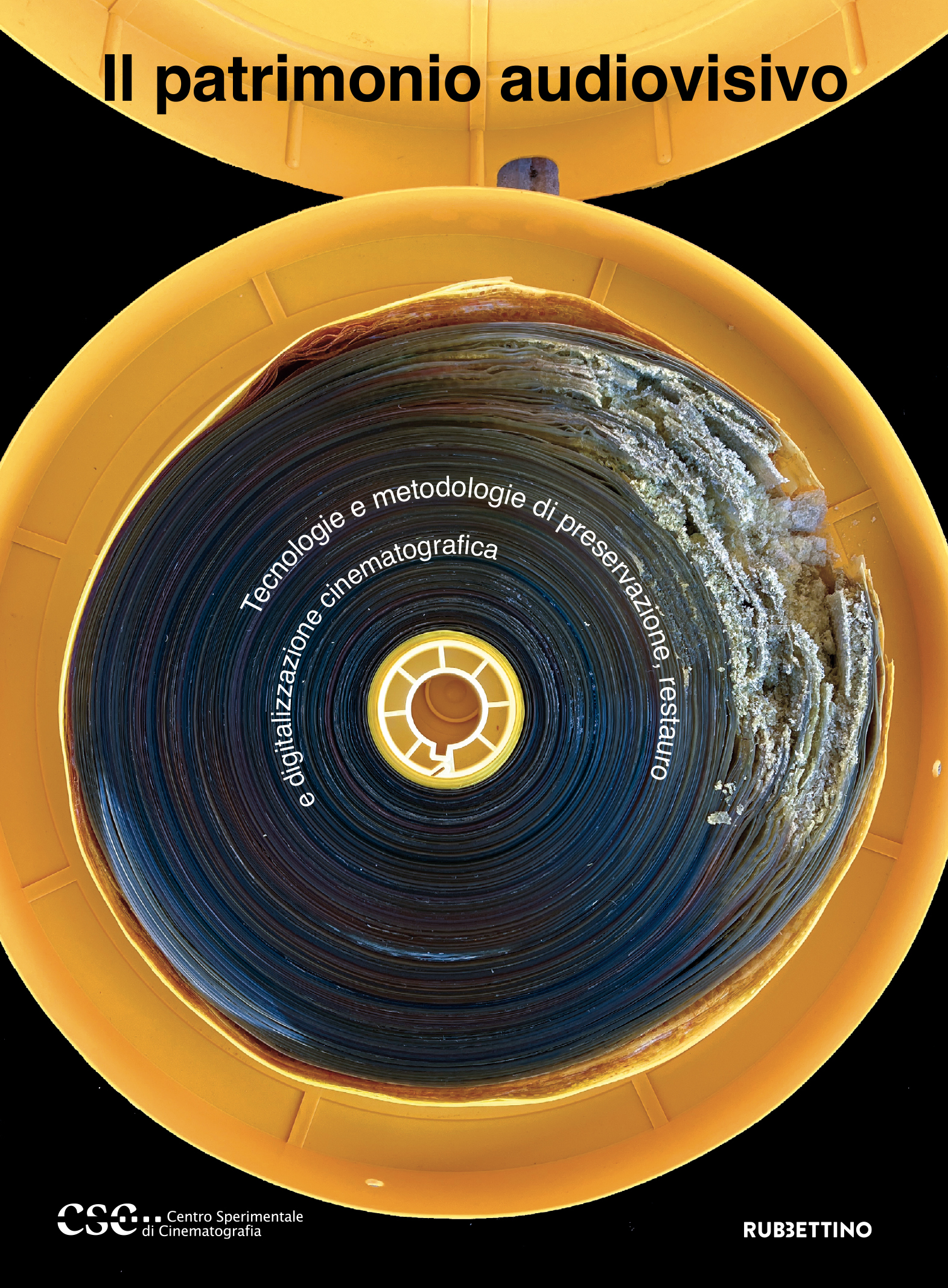
One of the most important tasks for any culture is the conservation and protection of artwork —this legacy of the past guides us towards our future. Whilst film in all its forms still tends to be regarded merely as entertainment rather than as a work of art, the situation is even worse when it comes to its preservation; and yet this audiovisual heritage is what comes closest to the way our brains store data, i.e. moving images.
However, this job, which is often left to people who work in the shadows of the archives, requires a great deal of specific expertise and knowledge – and sometimes even forgotten crafts; cinema thrives on technological innovation, and tracing its history also means dealing with many challenges. A film restorer must have knowledge of the history of cinema but also of the history of society; similarly, they must possess an understanding of physics, chemistry and electronics, and inevitably be familiar with both digital and photochemical processes.
This book cannot cover every facet of this complex craft, yet it attempts to explore as many elements as possible: from restoration theory to the composition and preservation of film footage, the study of non-film materials and sound, photochemical and digital restoration techniques, cataloguing and small-gauge films, archival law and the distribution of classics; it also touches on digital preservation and briefly discusses video material.
Naturally, films are the focus of the text, which is why the book includes five case studies that, in different ways, demonstrate how complex film restoration is and how it must always be tailored to the specific work in question.